
Optical Clocks
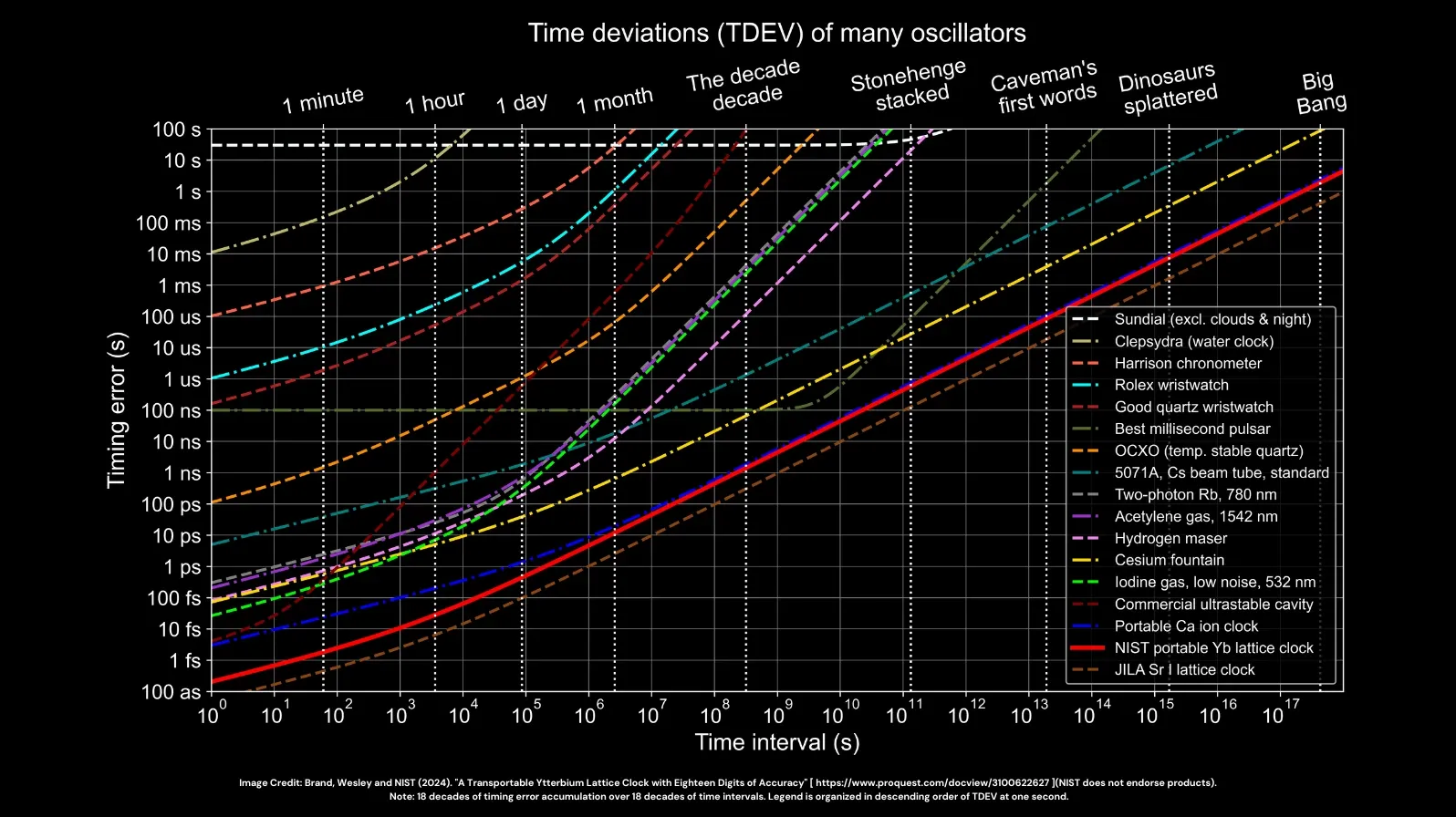
Microwave atomic clocks based on hydrogen, cesium, and rubidium sources have been around for decades and have had tremendous impact on the economy and national security. For example, a 2019 Study on the Economic Benefits of GPS commissioned by National Institute of Standards and Technology (NIST), estimates that GPS generated $1.4 trillion in U.S. economic benefits since the system became available in the 1980s.
This great success is also a vulnerability. GPS can be jammed, spoofed, and even disabled. The solution exists in next-generation clocks, so-called "optical clocks," that have shown unprecedented timing performance in laboratory environments.
Until now, optical clocks, which reference a quantum transition at optical, rather than RF, frequencies, have been confined to custom-built laboratories. The combination of commercially available optical frequency combs from Vescent and the Stabilaser from DFM present, for the first time, manufacture-ready optical clock solutions.
This technology will provide a backup to GPS, aid national security, and enable improved RADAR and imaging systems, data center synchronization, quantum computing, quantum networking, securing financial markets, and high-speed trading.