
Laser Stabilization
Quantum 2.0 can empower revolutionary innovations—quantum computing and networking, cybersecurity, sensing, precision PNT (position, navigation, and timing), global finances, and more.
But quantum innovators and their technologies cannot change
the world with unstable, uncertain laser systems. Vescent can provide tightly
locked laser stability in systems small enough and rugged enough to operate
outside the lab and into deployed systems.
Side Lock
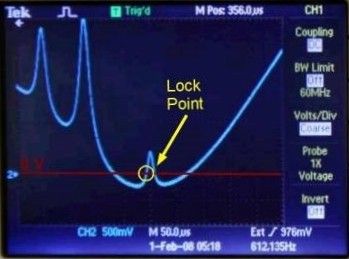
To achieve side lock, an error signal, generated from the difference between the laser frequency and an optical cavity reference frequency, is the input of a servo feedback loop. Then, with control electronics, the user adjusts loop parameters to push the voltage to zero and lock the signal at the resonance’s sidebands, where the difference in voltage is nonzero. The side lock does not indicate on which side of the peak the frequency is locked, due to sideband symmetry about the peak.
Peak Lock (Pound-Drever-Hall)
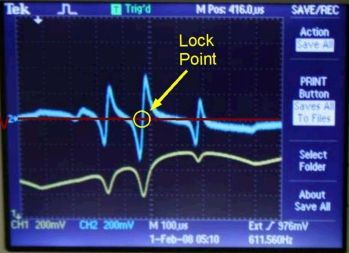
Side locking cannot indicate which sideband is locked, so the user doesn’t know in which direction to tune the frequency. Also, with side locking, intensity fluctuations affect frequency fluctuations. Pound-Drever-Hall (PDH) locking, or peak locking, improves on both counts. Using the derivative of the signal, PDH can lock at the peak instead of at sidebands. Also, due to the derivative’s asymmetry about the peak, the user knows whether a higher or lower frequency adjustment will recover the lock.
Offset Phase Lock (OPL)
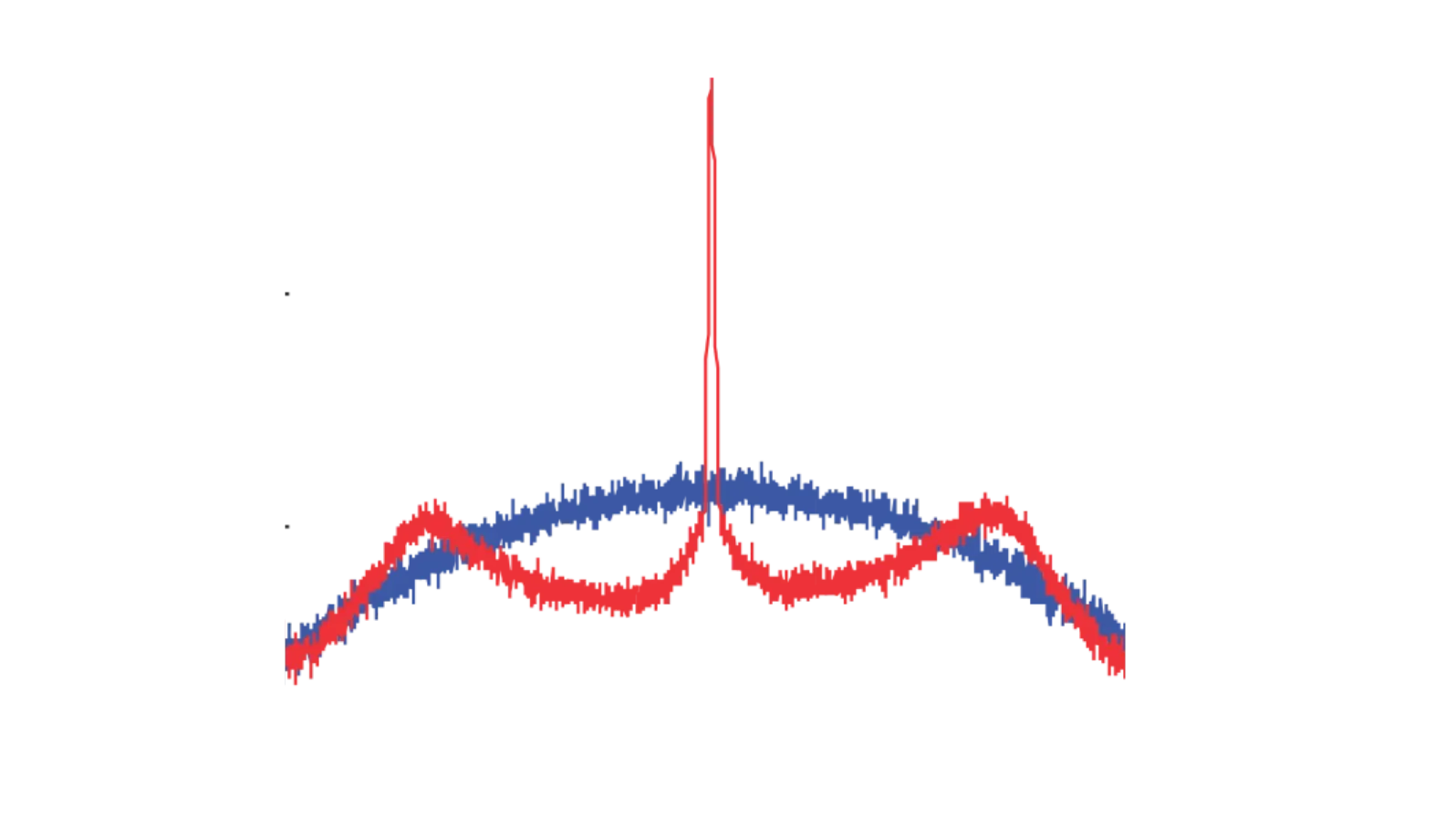
Locking the phase as well as frequency results in the added benefit of narrower linewidth, which enables applications such as cold-atom physics, atomic clocks, and frequency combs. OPL also optimizes user control with microsecond tuning capabilities and coherence between follower and leader lasers.